This diabetes technology offers a continuous stream of data to show a more complete picture of your blood sugars over time. This is different from a fingerstick meter that only represents that moment.
A continuous glucose monitor (CGM) is a compact medical device that continuously monitors your glucose levels, usually in 5-minute or less intervals, and streams that data to a smartphone app or another device for display.
Several companies make versions of a CGM. People with diabetes typically need a prescription for their monthly CGM supplies to manage their condition.
In recent years, non-prescription versions have also become available for those without the condition who might want to use the glucose-tracking technology to understand how food, exercise, or other factors affect their health.
This article will focus on CGM technology that is typically used by those with diabetes and typically requires a prescription.
How does a CGM work?
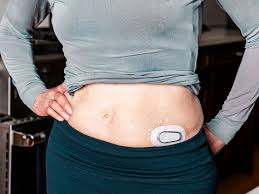 To use a traditional CGM, you insert a small sensor into your abdomen or arm, and a tiny plastic tube known as a cannula penetrates the top layer of skin.
An adhesive patch holds the sensor in place, allowing it to take glucose readings in interstitial fluid (the fluid that surrounds cells in the body) throughout the day and night.
Generally, the sensors last 7 to 15 days. However, there is a newer implantable CGM that is different than traditional types of CGM and it lasts for up to a year.
Depending on the particular manufacturer and generation of CGM sensor, it would connect to a small reusable transmitter that is essentially the “brains” of the system.
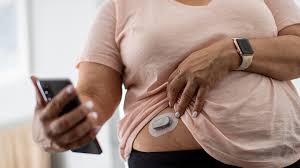
The transmitter sends real-time readings to a smartphone app or another device (such as an insulin pump or a separate receiver) to display your blood glucose data. Some systems come with a dedicated monitor, and some now display the information via a smartphone app, so you don’t even need to carry an extra device around with you.
Aside from the constant stream of data, most CGMs can send alerts when your blood sugar levels are rising too high or dropping too low. You can also set personalized alerts for your particular glucose target range and customize how you’re notified.
What are the benefits of a CGM?
It’s not an understatement to say that CGMs have revolutionized diabetes care.
Research shows that CGM technology is beneficial for all types of diabetes, including type 1 diabetes, type 2 diabetes, who may or may not be on insulin, and for those with gestational diabetes during pregnancy.
Traditionally, CGMs have been designed for people with type 1 diabetes. But in recent years, more people with type 2 diabetes have been using this technology and finding benefits compared to fingerstick management.
This has become a standard of care for the diabetes community.
Unlike a traditional fingerstick (blood glucose meters), which provides just a single glucose reading, CGMs provide continuous, dynamic glucose information every 5 minutes — roughly 288 readings in a day.
First off, you can literally see in real time the effects of food and exercise on your blood glucose levels, and catch cases of hyperglycemia (blood sugar too high) and hypoglycemia (blood sugar too low) as they happen, avoiding the potentially dangerous consequences.
This is a huge advantage over historic “static” blood glucose monitoring, which only provides a single glucose reading at a time.
Studies have shown CGMs to be among the best outpatient blood sugar management options for reducing A1C — the traditional “gold standard” test of blood glucose management.
Other researchTrusted Source shows that CGMs can help increase the user’s time-in-range (TIR), the overall percentage of time spent in a healthy glucose range. TIR is quickly becoming the new gold standard measure of positive diabetes outcomes.
CGMs can be especially beneficial for active children (and adults, too), for ensuring safety during physical activity and during nighttime glucose fluctuations.
How many CGM types are available?
Currently, there are 4 CGM systems approved by the Food and Drug Administration (FDA) and available in the United States.
Dexcom
San Diego-based Dexcom was the pioneer in this field, introducing the first-ever real-time CGM in 2006.
- Wear-time: Each Dexcom sensor is labeled to be worn on the abdomen for up to 10 days before needing replacement. The company expects to launch a 15-day sensor in late 2025.
- Design: For the G6, a separate transmitter clicks into the plastic-base housing of each new G6 sensor. Each transmitter lasts for about 90 days before needing replacement. However, one big difference is that the G7 has a combined sensor-transmitter, compared to the G6, which has separate pieces you must buy and use for the CGM to work.
- Connectivity: The sensor-transmitter uses Bluetooth connectivity to talk with the Dexcom G6 mobile app for both iOS and Android devices, as well as Apple Watch and other devices, including insulin pumps like the Tandem t:slim X2 and Omnipod 5.
- Alerts and alarms: The system offers customizable alerts, compatibility with Dexcom’s Clarity software and smartphone app for reviewing data, and the ability to easily share device data with up to 10 followers (which can include your doctor, diabetes educator, caregiver, or family members). It also includes voice integration via Apple’s Siri technology.
Abbott FreeStyle Libre
Abbott has been a longtime diabetes technology manufacturer, but the company got into the CGM game in just the past decade with its unique FreeStyle Libre Flash glucose monitor. It’s been available overseas since 2014 and received FDA approval in 2017.
What’s different about a “flash” system is that users wear a small round sensor inserted on the upper arm, but it does not automatically send readings.
Instead, users must manually swipe the handheld receiver or smartphone app over the sensor to get glucose readings.
Eversense implantable CGM
The Eversense system is the first long-term implantable CGM made by Senseonics.
It consists of a tiny sensor the size of a small twig implanted underneath the upper arm’s skin. Currently approved in the United States for up to a year of wear in the United States, it is by far the longest-lasting sensor.
How do I get a CGM?
As with most medical technology, you need a prescription to get a CGM for diabetes management. Your doctor can write a prescription for any of the above CGM devices.
But getting a prescription for a CGM is often not as simple as just walking into your doctor’s office and asking for one.
Instead, you’ll likely need a prior authorization (PA) to get a CGM through your health insurance. This is a form or process that your doctor has to go through to prove “medical necessity” to obtain approval from your insurance plan to cover the costs associated with the prescribed treatment (CGM, in this case).
Pros and cons of using a CGM
CGMs are the most advanced tools currently available for diabetes care, but like everything else, they have pros and cons in terms of lifestyle impact.
Pros
- eliminate the need for fingerstick tests
- provide alerts and alarms for high and low glucose levels
- constant data stream can help you spot trends
- users report that they learn about their diabetes and its relationship to their bodies
Cons
- wearable tech — even without wires, you’ll still have to deal with having a device affixed to your body
- the constant data stream can be a drawback for some people, creating a sense of urgency to constantly react to the number you see on the screen
- if you’re very concerned about real-time safety alerts, you may want to skip the Abbott Libre system (at least until a new model comes out that includes alarms)
- costs are a major concern for many people
The takeaway
CGM technology has been a game-changer for people with diabetes, as it offers a hugely improved ability to constantly track glucose levels.
Unlike traditional fingerstick meters, which only provide a snapshot of blood sugars at the moment, CGM systems provide a complete picture of how one’s blood sugars are trending both in the moment and over time.
Many CGMs are being connected to insulin delivery devices to create combo systems that can automatically adjust insulin doses based on the glucose data being streamed via Bluetooth.